
What are IVF Procedures | A Step By step Guide
Roughly one in six couples in India faces some form of infertility challenge. Yet for most of them, the decision to pursue IVF comes after months — sometimes years — of incomplete information, well-meaning advice from family, and a growing list of unanswered questions. If you're considering IVF treatment in Hyderabad, this guide is built for you. Not as a clinical manual, but as an honest, stage-by-stage walkthrough of what actually happens, what to expect emotionally and physically, and what separates a successful cycle from an unsuccessful one. By the end, you'll know enough to have a real conversation with your fertility specialist — not just nod along.What Is IVF, and Who Is It Actually For?
IVF — In Vitro Fertilisation — is a process where eggs are retrieved from the ovaries, fertilised with sperm in a controlled laboratory environment, and the resulting embryo is transferred into the uterus to establish a pregnancy. The "in vitro" part is Latin for "in glass" — a reference to the lab dish where fertilisation occurs, outside the body. It's a straightforward concept. The execution, however, involves precise hormonal management, expert embryology, and careful monitoring across three to six weeks. IVF is recommended in situations including:- Blocked or damaged fallopian tubes
- Unexplained infertility after 12 months of trying (or 6 months if the woman is over 35)
- Low sperm count or abnormal sperm motility
- Endometriosis affecting egg or uterine quality
- Polycystic ovary syndrome (PCOS) unresponsive to other treatments
- Recurrent pregnancy loss with identifiable embryo-related causes
- Cases where genetic screening of embryos is medically advised
Stage 1: Initial Consultation and Pre-Treatment Workup
Every IVF cycle begins long before any medication is prescribed. The consultation phase is where your fertility specialist builds a picture of both partners' reproductive health. Expect hormone blood tests (FSH, LH, AMH, estradiol), a transvaginal ultrasound to assess ovarian reserve, a semen analysis, and screening for any infections or genetic conditions that could affect the cycle or embryo health. This stage matters more than most couples realise. An AMH (Anti-Müllerian Hormone) test, for instance, gives your doctor a reliable estimate of your remaining egg supply — directly influencing how much stimulation medication you'll need and how many eggs are likely retrievable. Skipping or rushing this workup is one of the most common reasons early IVF cycles produce suboptimal results. At Origins IVF, this workup is also when your doctor will discuss realistic success probability based on your individual profile — not a generic clinic-wide statistic. Age, ovarian reserve, sperm parameters, and uterine condition all interact, and a personalised assessment reflects that complexity. According to the Indian Society of Assisted Reproduction, the average IVF success rate in India is approximately 30–35% per cycle for women under 35, declining progressively with age.Stage 2: Ovarian Stimulation — More Than Just "Taking Injections"
The first active phase of an IVF cycle involves stimulating the ovaries to develop multiple mature eggs simultaneously. Normally, the ovaries release one egg per cycle. IVF medications — typically gonadotropins containing FSH (follicle-stimulating hormone) — override that default, encouraging a cohort of follicles to develop together. This phase lasts approximately 10–14 days. During it, you'll attend monitoring appointments every 2–3 days for blood tests and ultrasounds that track follicle growth in real time. Your medication dose may be adjusted based on how your ovaries respond. Here's a nuance that often goes unmentioned: ovarian stimulation is not a one-size-fits-all protocol. Women with PCOS require a gentler stimulation approach to avoid ovarian hyperstimulation syndrome (OHSS) — a condition where the ovaries respond too aggressively, causing fluid retention and discomfort. Women with diminished ovarian reserve, on the other hand, may need a higher dose to produce enough eggs. A well-calibrated stimulation protocol — one tailored to your hormone baseline and real-time response — is where clinical experience visibly translates into better outcomes.Stage 3: Egg Retrieval — What the Procedure Actually Involves
Once the follicles have reached optimal size (typically 18–20mm), a trigger injection (usually hCG or a GnRH agonist) is administered to prompt final egg maturation. Egg retrieval takes place 34–36 hours later. The procedure is performed under mild sedation — most patients are awake within 30–45 minutes with no recollection of discomfort. A thin ultrasound-guided needle is passed through the vaginal wall into each follicle, aspirating the fluid and the egg within. The entire retrieval typically takes 15–20 minutes. You'll likely experience mild cramping and spotting for 24–48 hours afterward. Most women return to light activity the following day. On the same day as egg retrieval, a semen sample is collected from the male partner (or a donor sample is prepared if applicable). The embryology team takes over from here.Stage 4: Fertilisation and the Role of the Embryology Lab
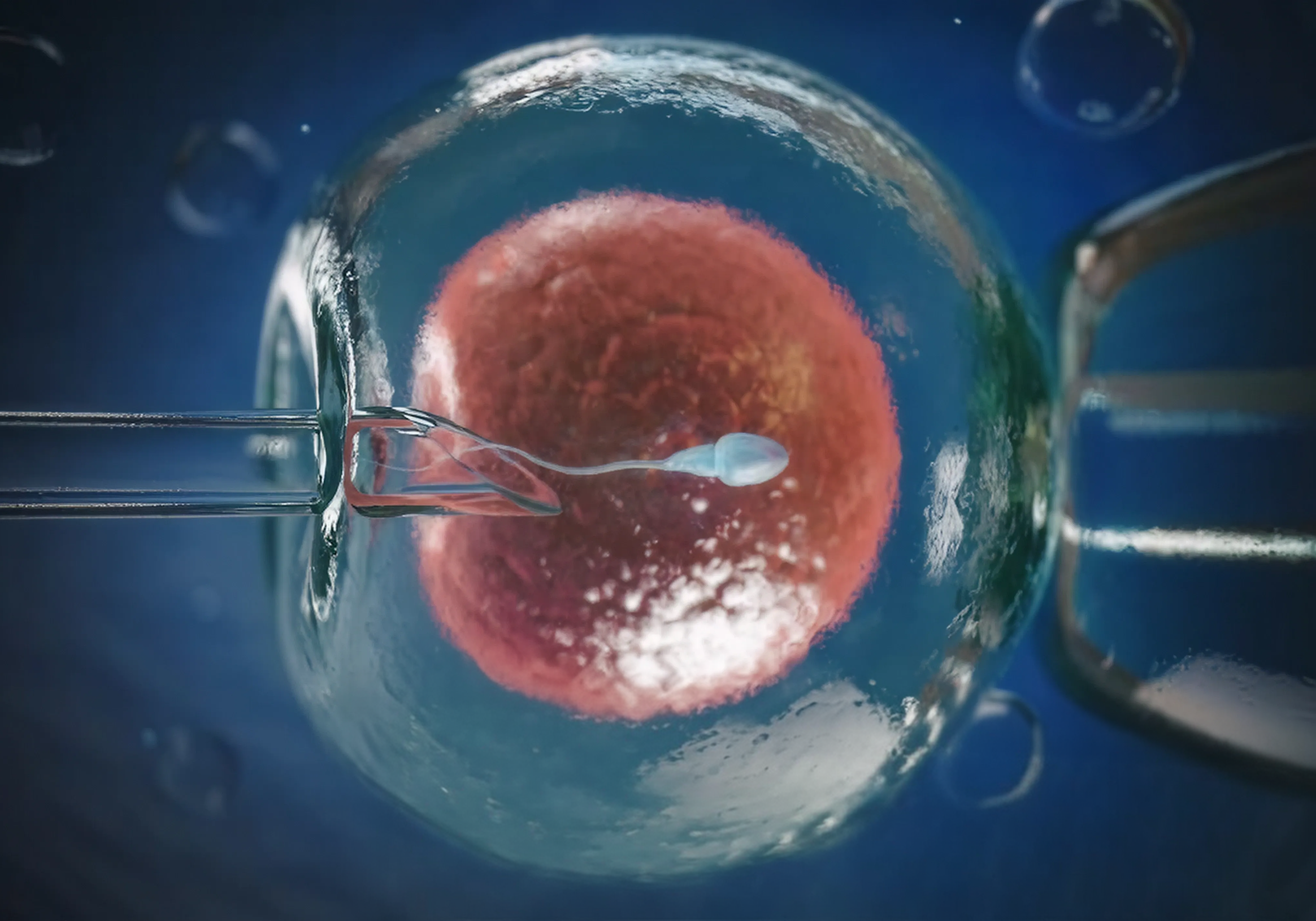
This is where most fertility clinic content goes silent — and where Origins IVF believes transparency matters most. After retrieval, eggs are assessed by an embryologist for maturity. Only mature (MII stage) eggs can be fertilised. Immature or degenerated eggs are set aside. Fertilisation happens one of two ways: Conventional insemination: Prepared sperm is placed in a culture dish alongside eggs, allowing natural fertilisation to occur. This mimics conditions inside the body. ICSI (Intracytoplasmic Sperm Injection): A single, carefully selected sperm is injected directly into each mature egg using a microscopic needle. ICSI is recommended when sperm count is low, motility is poor, or previous IVF cycles have had poor fertilisation rates. A 2022 meta-analysis published in Human Reproduction found that ICSI does not significantly improve pregnancy outcomes over conventional insemination in couples without a diagnosed male-factor infertility issue. Fertilised eggs — now called zygotes — are incubated in a tightly controlled environment. Temperature, CO₂ levels, light exposure, and culture media composition all affect embryo development. This is not passive storage; it is active biological support.The Lab Factor: What Happens Inside the Incubator Determines Your Outcome
No competitor blog will tell you this directly, so we will: the quality of the embryology laboratory is among the most significant determinants of IVF success — arguably more impactful than any single clinical procedure. Here's why. After fertilisation, embryos spend 3–6 days developing in culture before transfer. During this time:- Air quality in the lab must meet ISO Class 5 standards (equivalent to an operating theatre) to prevent embryo-damaging contaminants
- Culture media must be regularly validated and lot-tested
- Incubators with real-time embryo monitoring (time-lapse imaging systems like EmbryoScope) allow embryologists to observe development without disturbing embryos
- Embryo grading at the blastocyst stage (Day 5–6) requires experienced embryologist assessment — grading errors lead to suboptimal embryo selection
Stage 5: Embryo Development and Selection
Over 3–6 days, the fertilised eggs undergo a series of critical cell divisions. By Day 3, a healthy embryo typically has 6–8 cells. By Day 5–6, it reaches the blastocyst stage — a more developed structure with a distinct inner cell mass (which will become the baby) and an outer trophectoderm layer (which will become the placenta). Blastocyst transfer is now the preferred approach in most cases. Research consistently shows that Day 5 transfers yield higher implantation rates than Day 3 transfers, because blastocysts have already proven their developmental competence. Preimplantation Genetic Testing (PGT) may be recommended in certain situations — recurrent pregnancy loss, advanced maternal age, or known genetic carrier status. PGT screens embryos for chromosomal abnormalities before transfer, significantly improving the chance of implantation and reducing miscarriage risk. This is an additional procedure with associated costs, but for the right candidates, it can reduce the number of transfer cycles needed.Stage 6: Embryo Transfer — A Procedure Far Simpler Than It Sounds
Embryo transfer is, medically speaking, one of the least invasive steps in the IVF process. No sedation is required. The procedure takes approximately 5–10 minutes. A thin catheter is guided through the cervix into the uterus under ultrasound guidance, and the embryo is gently deposited at a pre-determined location in the endometrium. Most women describe the sensation as similar to a routine cervical smear test. What makes embryo transfer more complex than it appears is the preparation of the uterine lining. Estrogen and progesterone supplementation in the days prior to transfer bring the endometrium to optimal thickness and receptivity — typically 7–10mm with a trilaminar (three-layered) pattern on ultrasound. A thin or poorly prepared lining significantly reduces implantation probability, regardless of embryo quality. Your specialist may recommend a frozen embryo transfer (FET) cycle in cases where fresh transfer carries OHSS risk, or when genetic testing requires embryo freezing first. FET outcomes are comparable to — and in some studies, slightly better than — fresh transfer, because the uterine environment is unaffected by the stimulation medication.Stage 7: The Two-Week Wait and the Pregnancy Test
After transfer, the embryo needs 9–14 days to implant and produce detectable levels of hCG — the pregnancy hormone. This period is almost universally described by couples as the most difficult part of the entire IVF process. Physical symptoms during this time are notoriously ambiguous. The progesterone supplements you'll be taking can mimic early pregnancy symptoms — breast tenderness, bloating, fatigue — whether or not implantation has occurred. This creates an emotional landscape where hope and anxiety are genuinely indistinguishable. A few practical anchors for this period: avoid home pregnancy tests in the first 7–8 days (residual trigger injection hCG can give false positives). Stay gently active. Bed rest is not medically recommended and has not been shown to improve outcomes. And keep your support network close — whether that's a partner, a trusted friend, or a fertility counsellor. The official pregnancy test — a blood serum hCG test — is conducted 10–14 days post-transfer. A positive result triggers ultrasound monitoring over the following weeks. A negative result is the beginning of a conversation, not the end of a journey.Key Takeaways: What Every Couple Should Know Before Starting IVF in Hyderabad
- IVF is a series of connected stages, not a single procedure. A complete cycle from consultation to pregnancy test spans 6–8 weeks. Understanding each stage reduces anxiety and improves how you interpret your body's signals.
- The embryology lab is as important as the fertility specialist. Ask about laboratory accreditation, incubation technology, and embryologist experience when comparing clinics.
- Stimulation protocols are (and should be) personalised. A one-size stimulation approach is a red flag. Your AMH, antral follicle count, age, and BMI should all inform how your cycle is designed.
- Blastocyst-stage transfer typically outperforms Day 3 transfer. If your clinic recommends Day 3 transfer as the default, ask why — and whether blastocyst culture is feasible in your case.
- Frozen embryo transfer (FET) is not a consolation option. In many clinical profiles, FET outcomes equal or exceed fresh transfer. Stored embryos represent genuine future opportunity.
- The two-week wait is emotionally the hardest phase. Plan for it in advance. Fertility counselling support, available at Origins IVF, can meaningfully reduce the psychological burden of this period.
- One cycle does not define your outcome. Most IVF specialists recommend evaluating the process after 2–3 cycles if the first is unsuccessful. Each cycle generates clinical information that helps refine the next.